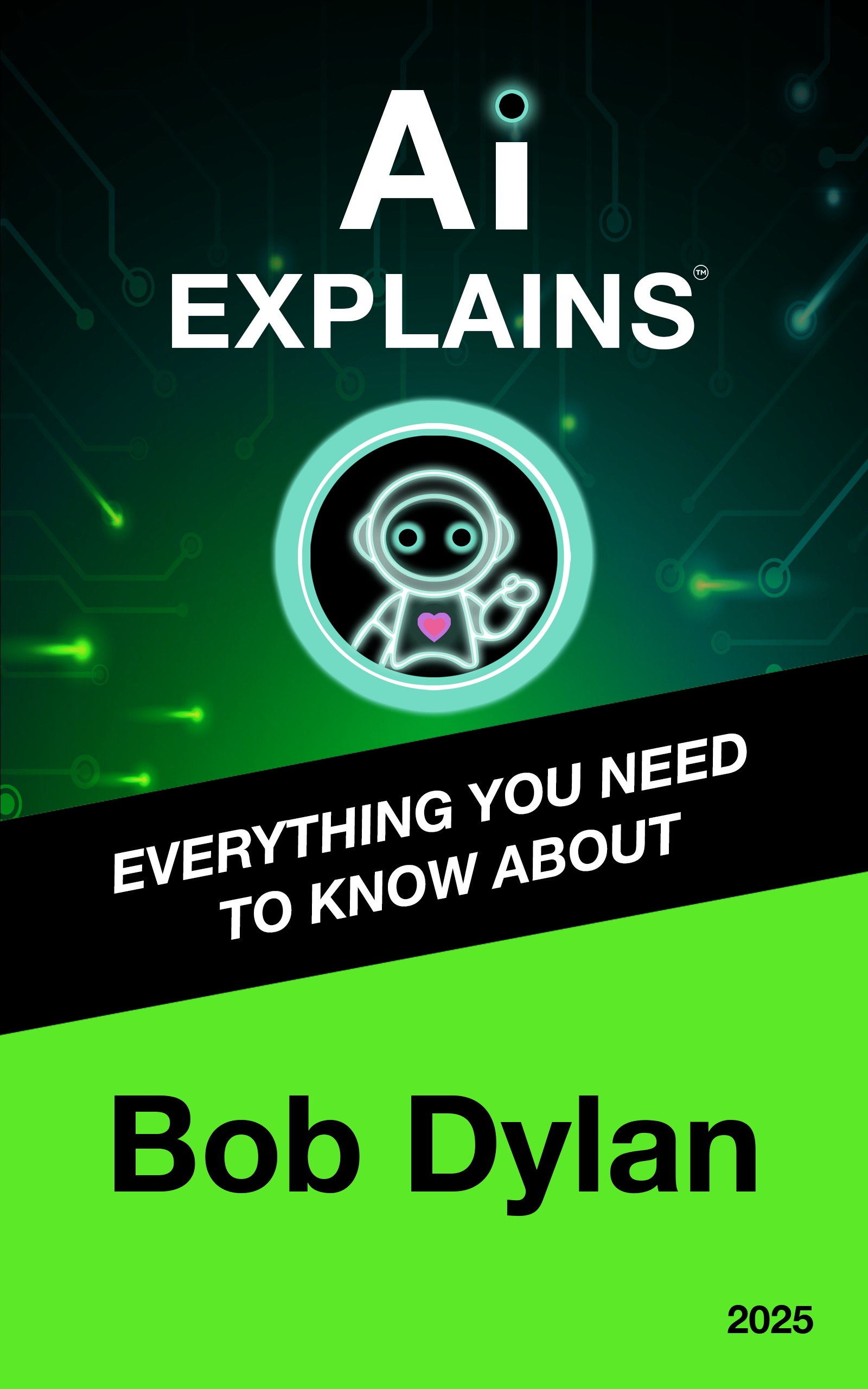
This page provides a concise overview of "AI Explains: Bob Dylan" from the AI Explains series, including a summary and where to buy it.
AI Explains Series
AI Explains: Bob Dylan
This book offers an in-depth analysis of Bob Dylan’s seven-decade career, highlighting his relentless self-reinvention and the complex interplay between his personal myth and artistic freedom. It explores how political, spiritual, and cultural influences shaped his revolutionary work, emphasizing his synthesis of literary ambition and American roots music. Covering his transformations from folk poet to electric innovator and late-career curator, it provides a nuanced understanding of his enduring influence and Nobel-winning artistry.
About the Book
Bob Dylan is not merely a musician; he is a sustained act of artistic self-creation, a figure whose career is defined by a relentless, often confrontational, refusal to be defined. From the moment Robert Zimmerman shed his Minnesota identity to become the enigmatic folk poet of Greenwich Village, his life has been a masterclass in strategic reinvention. This book offers an exhaustive, analytical journey through the seven decades of his multifaceted career, moving beyond simple biography to explore the intellectual, spiritual, and cultural forces that shaped his genius. We examine the profound tension between the man and the myth—the constant struggle between the demands of fame and the necessity of artistic freedom—that fueled his most revolutionary work.
This analysis reveals the deliberate, often calculated, nature of his transformations. We trace how the political conscience instilled by figures like Suze Rotolo provided the intellectual framework for his early protest anthems, and how the infamous "Judas!" moment at the 1965 Newport Folk Festival was not a betrayal, but a necessary act of artistic self-immolation that liberated him to create the "thin, wild mercury sound" of his electric trilogy. Furthermore, we delve into the specific, often surprising, catalysts for his later work. For instance, the non-linear narrative technique that gave Blood on the Tracks its devastating emotional complexity was directly inspired by the teachings of painter Norman Raeben, who taught Dylan to view time and memory simultaneously. This book argues that Dylan’s genius lies in his ability to synthesize high literary ambition with the raw vernacular of American roots music, constantly challenging the boundaries of what a popular song can achieve.
By dissecting his entire chronology—from the gospel trilogy and the philosophical solution of the Never Ending Tour to his late-career role as a curator on Theme Time Radio Hour and his audacious interpretations of the American Songbook—we provide the context necessary to understand his enduring relevance. This book is essential reading for scholars, musicians, and dedicated fans seeking a nuanced appreciation of his craft. It offers a comprehensive framework for understanding the lyrical complexity that earned him the Nobel Prize in Literature, confirming his place not just as a songwriter, but as the definitive literary laureate of the American experience. You will gain a deeper understanding of the contradictions that define his art, ensuring that you can engage with his vast, evolving body of work with informed insight and renewed appreciation.