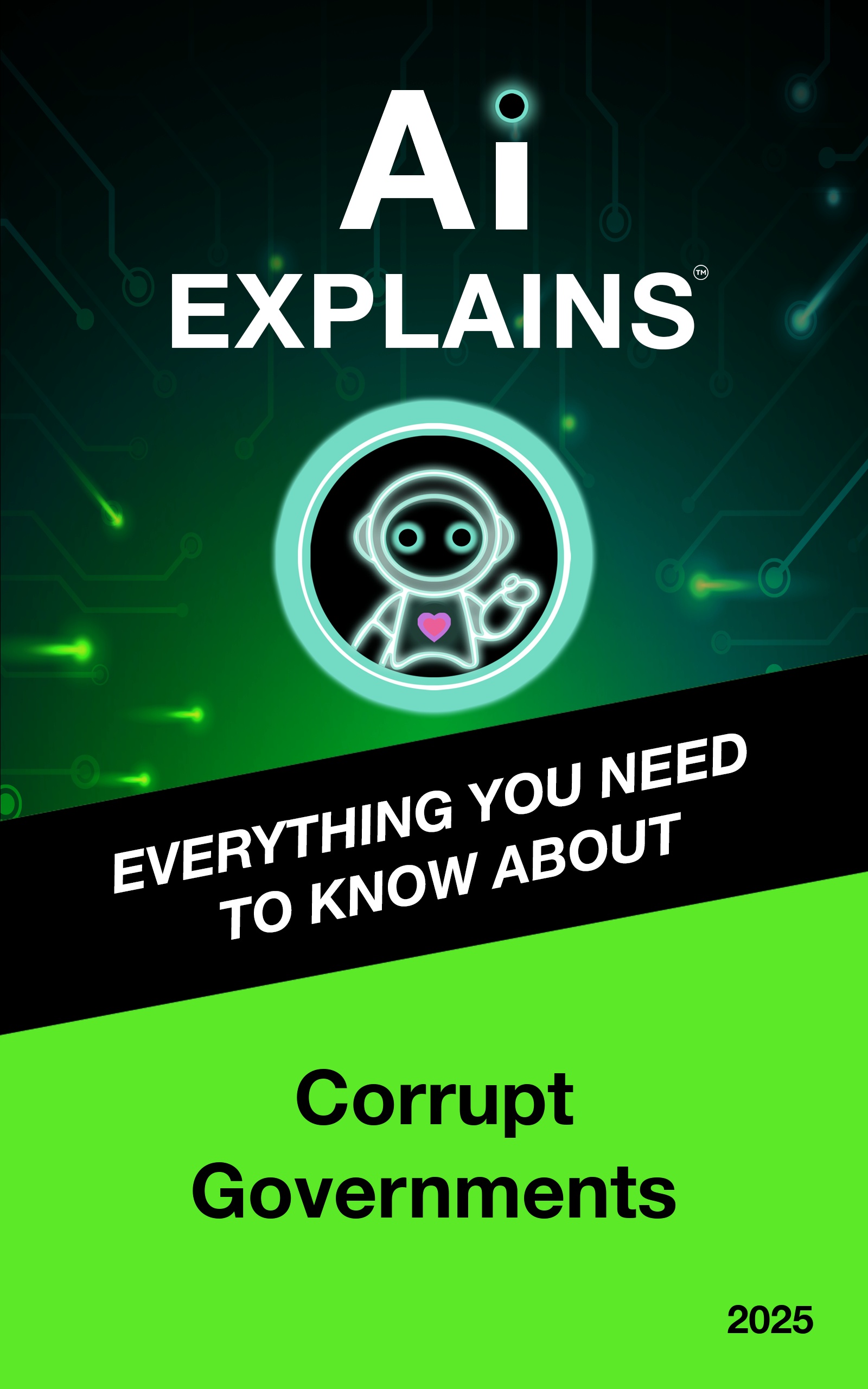
This page provides a concise overview of "AI Explains: Corrupt Governments" from the AI Explains series, including a summary and where to buy it.
AI Explains Series
AI Explains: Corrupt Governments
This book explores the pervasive nature of political corruption across history and nations, highlighting its various forms—from petty bribery to grand kleptocracy—and its devastating impact on societies, economies, and public trust. It examines the systemic conditions that enable corruption, such as weak institutions and inequality, and details its harmful effects on development, public services, and human rights. Additionally, it discusses historical patterns, resistance efforts, and strategies for reform, emphasizing the importance of transparency, accountability, and international cooperation in combating corruption for a more just future.
About the Book
Corrupt governments are not a distant problem confined to a few unfortunate nations; they are a pervasive force woven throughout human history and across the globe, fundamentally shaping societies, economies, and the lives of billions. At its core, political corruption represents a profound betrayal of public trust – the misuse of official power, authority, and resources not for the common good, but for private gain. This book delves into the multifaceted nature of this shadow state, moving beyond simple definitions to explore its diverse manifestations, from the everyday frustrations of petty bribery and the unfair advantages of nepotism and cronyism, to the sophisticated mechanisms of grand corruption like rigged procurement and the alarming reality of kleptocracy, where the state itself becomes an instrument of plunder. You will gain a comprehensive understanding of how these practices operate, both at the individual level and as deeply entrenched systems that distort the very purpose of governance.
Understanding corrupt governments requires examining the conditions that allow them to flourish. This book unpacks the critical factors, revealing how weak institutions, a lack of transparency and accountability, stark economic inequality, and the corrosive influence of concentrated wealth and problematic political financing create fertile ground for graft. It lays bare the devastating toll corruption exacts, crippling economic development through distortion and capital flight, eroding the public trust essential for social cohesion, degrading vital public services like health and education, and even facilitating environmental destruction and human rights abuses. For instance, consider that globally, over a trillion dollars is estimated to change hands each year in bribes alone – a staggering figure that hints at the immense resources diverted from public needs into private pockets, a reality explored within these pages.
Tracing the history of corrupt governance, from the political machines of the 19th century that perfected patronage to the modern resurgence of kleptocracy and the enduring challenge of oligarchy, reveals both the adaptability of corruption and the long struggle against it. But this is not just a story of decay; it is also a story of resistance and reform. The book explores the strategies societies employ to push back, highlighting the vital roles of strengthening legal frameworks and enforcement, leveraging democratic institutions, empowering civil society, independent media, and citizen activism, and fostering international cooperation to tackle a problem that transcends borders. Anyone seeking to understand why some nations thrive while others struggle, the fundamental challenges facing democracy and development, or how citizens can effectively demand integrity and accountability from those in power will find this book an essential guide to navigating the complexities of corrupt governments and the prospects for a more just future.