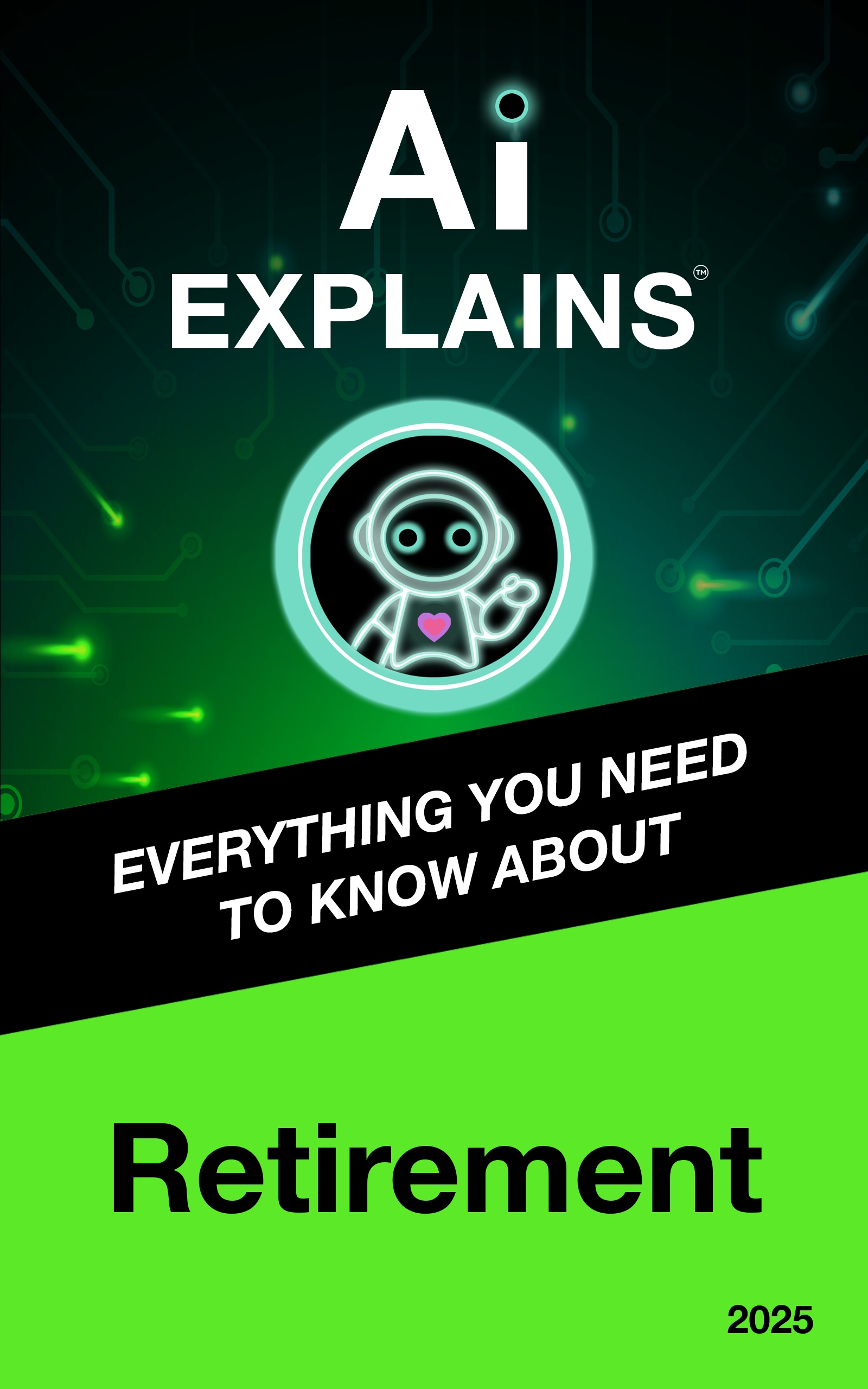
This page provides a concise overview of "AI Explains: Retirement" from the AI Explains series, including a summary and where to buy it.
AI Explains Series
AI Explains: Retirement
This book explores the historical origins and evolving realities of retirement, highlighting how longer lifespans and shifting systems demand a new, proactive approach. It offers evidence-based strategies for financial, health, and purposeful living post-career, emphasizing the importance of healthspan, risk management, and psychological adaptation. Combining research and practical advice, it guides readers and professionals to navigate the complexities of modern retirement, transforming extended life into a period of autonomy, fulfillment, and resilience.
About the Book
The concept of retirement is a historical anomaly, a societal invention barely a century old. When German Chancellor Otto von Bismarck introduced the world’s first state pension in 1889, he set the eligibility age at 70—a number that seems reasonable until you realize the average life expectancy for a man at that time was only 45. The system was designed to be fiscally sound because very few people were expected to survive long enough to collect benefits. This historical detail underscores a profound truth: the architecture of retirement has always been rooted in political calculation and demographic reality, not guaranteed leisure. Today, that reality has been inverted. We are living longer than ever before, but the financial and psychological systems designed to support this extended life stage are collapsing under the weight of their own success. The certainty of the old Defined Benefit pension is gone, replaced by the complexity of the self-managed 401(k), shifting the entire burden of longevity, investment, and health risk onto the individual.
This book is a comprehensive guide to navigating this new, complex landscape. It moves beyond simple investment advice to provide an evidence-based framework for designing a sustainable, purposeful, and healthy post-career life. We critically examine the "great unwinding" of corporate responsibility, dissecting the financial vulnerabilities exposed by market fluctuations like the 2008 crisis, and providing strategies to mitigate the Sequence of Returns Risk that threatens early retirees. Drawing on cutting-edge research from longitudinal studies like the U.S. Health and Retirement Study (HRS) and the European SHARE survey, we reveal how health shocks often force involuntary early retirement, underscoring why maximizing your "healthspan"—the years lived in good health—is the most valuable financial decision you can make. We explore the psychological pivot required to overcome the "structure vacuum" of lost identity, detailing how the emerging trends of pre-tirement, therapeutic recreation, and the gig economy are redefining purpose after the paycheck stops.
The modern retirement is not a destination; it is a dynamic, multi-faceted life stage demanding continuous adaptation. This book is essential for anyone currently planning their exit, those already navigating the complexities of drawdown, and financial professionals seeking a deeper, research-backed understanding of the socio-economic forces at play. You will gain the knowledge to strategically optimize your Social Security benefits, master tax diversification through Roth conversions, and evaluate the complex trade-offs of aging in place versus leveraging geo-arbitrage by retiring abroad. By integrating historical context, rigorous research, and practical strategies for finance, health, and legacy planning, this volume provides the authoritative roadmap necessary to transform the uncertainty of an extended life into a period of profound autonomy and fulfillment.